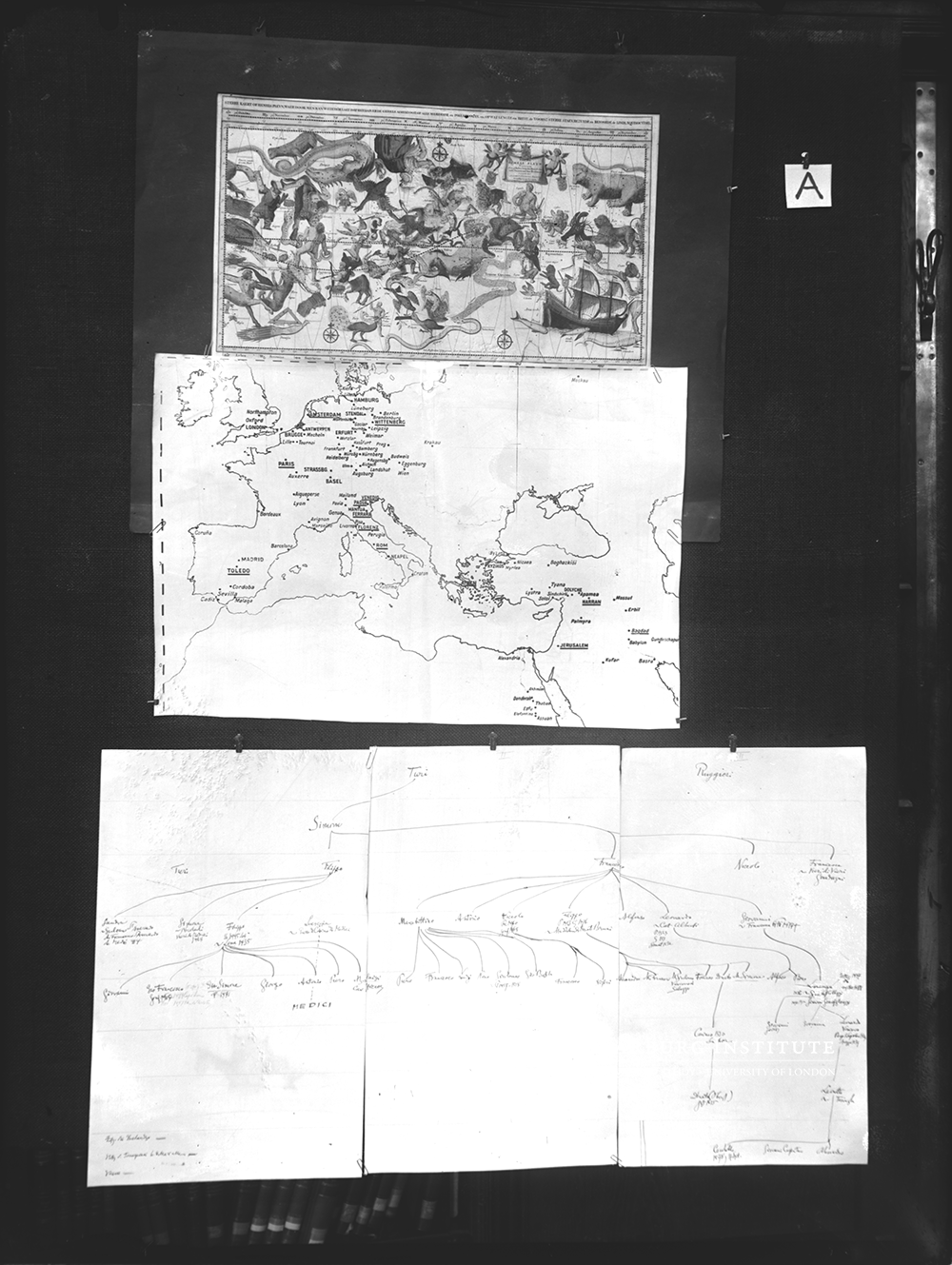
The construction of imagination
vendredi 06 juin 2025
à 09:30
Soutenance de thèse
Mariabruna Fabrizi
Amphithéâtre 130
Jury
- Carlotta Darò, Associate Professor, HDR, École Nationale Supérieure d'Architecture de Paris-Malaquais/ETH Zurich (rapporteur)
- Andrea Urlberger, Professor, HDR, École Nationale Supérieure d'Architecture de Toulouse (rapporteur)
- Paolo Amaldi, Professor, HDR, École Nationale Supérieure d'Architecture de Paris-Val de Seine (examiner)
- Roula Matar, Senior Lecturer, École Nationale Supérieure d'Architecture de Versailles (examiner)
- Roberto Gigliotti, professore associato, Libera Università di Bolzano (guest member)
- Sébastien Marot, professor and HDR, Ensa Paris-Est (director)
- Anna Rosellini, professor, PhD, Ensa Paris-Est (co-director)
Abstract
This thesis explores architectural imagination, understood as a structured and deliberate process. By linking the field of architecture to cognitive science research, it offers a new framework for understanding how imagination can be systematically constructed and directed in architectural practice through the use of specific tools and devices based on internal cognitive structures. Furthermore, by analyzing the mechanisms underlying imaginative thinking, the research seeks to demonstrate the cyclical relationship between imagination and space, in which imaginative structures emerge from interactions with space and are, in turn, externalized and spatialized, thus influencing the very foundations of imagination once again.
At the heart of this research is the concept of embodied cognition, which highlights the interrelationship between mind, body, and space, as well as the notion of “image schemas,” mental models that organize images acquired through perception and stored in memory, allowing for their recombination and the productive leap necessary for the formation of new content. According to cognitive scientist Mark Johnson, image schemas emerge from recurring bodily and spatial logics experienced during the preverbal stages of childhood. Perceived and memorized images constitute fragments organized according to the logical structures of image schemas. Through a comparative analysis of philosophical and cognitive theories that address imagination and offer in-depth definitions of it, notably Gilbert Durand's Les Structures de l'imaginaire (The Structures of the Imagination), Paul Ricœur's Lectures on Imagination, and Mark Johnson's The Body in the Mind, this text identifies recurring themes that characterize this faculty and applies them specifically to the context of architectural imagination.
One of the major themes that runs through theories of imagination is its dual anchoring, both collective and individual. This work first examines the role of collective figures in architectural imagination, in particular the schema, the archetype, and the type. It then combines theoretical exploration with case study analysis to identify a series of visual devices that, drawing on these collective structures, enable architects to construct and guide their imaginative processes. Collections of images or postcards, atlases, imaginary museums, cartographies, and other specifically designed visual devices are examined from the perspective of cognitive science, particularly through the theory of the extended mind and its related concept of exograms.
Starting from the two-dimensional organization of images as a form of externalization of the imagination, the thesis then examines the spatial action of architecture in structuring thought and its capacity to embody cognitively rich environments that influence mental faculties, particularly the imagination. From the mental palaces of the art of memory to architectural drawings, from spaces built and designed for study, such as studioli and libraries, to specific case studies, such as John Soane's House Museum, Patrick Geddes' Outlook Tower, Aby Warburg's Kulturwissenschaftliche Bibliothek, and Paul Otlet's Mundaneum, the thesis identifies paradigmatic spatial organizations that offer a distinctly cognitively rich environment and support the process of imagination.
Following a movement from its emergence in space to its externalization through space, this research proposes a renewed art of memory, rethought as an art of imagination, where images, visual devices, and architectural organization function as cognitive frameworks for the construction of architectural imagination.
Mariabruna Fabrizi is an architect and lecturer at Ensa Paris-Est. She prepared this doctoral thesis at the OCS laboratory at Ensa Paris-Est, the Doctoral School of City, Transport, and Territory at the University of Paris-Est, and Gustave Eiffel University.
↓ Illustration
"Panel A". A, Warburg, Bilderatlas Mnemosyne, Photographic reproduction of the original panel, assembled ca. 1926-1929. From A by Warburg, Der Bilderatlas Mnemosyne: Commentary Volume, edited by Martin Warnke, Claudia Brink, and Horst Bredekamp in Berlin: Akademie Verlag, 2000.